28 . Aug . 26
Newborn & Baby (0 - 18 months)

There's a moment somewhere around week 30 when the checklists start multiplying. Nappy bag or hospital bag first? Cot or bassinet? Do you really need a wipe warmer? It's a lot.
So here's the guide I wish someone had handed me: everything you actually need before your baby arrives, organised the way real life is organised: out and about, on the road, at home, for you, and for them, plus the buying knowledge that actually matters. Not just what to buy, but what separates a genuinely good version of each item from one that just looks the part.
Out and about
Once mum is feeling up to it after birth, getting out of the house matters for your sanity as much as the baby's.
Checklist:
- Pram with bassinet for newborn, that converts to a seat after 6 months
- Nappy Bag (Stocked with pacifiers, nappies, wipes, burp cloths, a bottle or snacks, toys, beanie, spare clothes)
- Pram organiser or caddy for easy access to your keys, phone and other essentials
- Portable first aid kit
- Portable change mat
- Pram accessories (Rain Cover, Sunshade, Cup Holder, Winter Cocoon)


The pram is the big decision, so take your time with it.
A few things worth knowing before you commit:
- One baby or a future sibling? If there's any chance of a second child within a few years, look at whether the pram model converts from single-to-double and allows a standing board later. Buying a convertible pram once is usually cheaper than buying a single pram now and a double later. If you're confident it's a one-and-done, a dedicated single will usually be lighter and more compact, so don't over-buy "just in case" if you don't need to.
- Check what it's compatible with. Some prams accept an infant capsule directly onto the frame (a "travel system"), which is genuinely useful in the first few months when transferring a sleeping baby from car to pram matters. Check this before you buy the capsule and the pram separately. All Redsbaby prams are capsule compatible, and we offer 20% off your capsule, when you purchase at the same time as your pram.
- Weight, fold and boot size matter more once you're living it daily than they do in a showroom. If you're an apartment-dweller or catch public transport often, a compact one-hand fold is worth prioritising over extra storage.
- Performance and features. Not all prams are created equally, and the features brands choose to prioritise will impact how easy a product is to use. Some features are standard across all reputable models such as ball bearings in wheels, a 5-point safety harness, and steel frames so don’t fall into the trap of selecting your pram based on these standard features. The features that actually changed my life as a new mum are:
Suspension – when your pram is fully loaded with 15kgs in the basket and a 10kg child in the seat, you want to make it as easy as possible to steer and push. Look for a brand that prioritises the performance of suspension.
Mesh ventilation, with back support – Look for a seat that has firm back support, with side panels for ventilation so you get the best of both worlds. As a mum, I want to make sure my child is being supported through their development so an ergonomic pram with back support was important to me. However, lots of prams with solid seat backs compromise on ventilation. Look for a pram seat with back support and ventilation panels in the sides and canopy so that in summer your child stays cool, and is happy to sit in the pram for longer periods of time.
A bassinet that shares the same frame as the seat – Baby gear takes up so much space, and some items are only in use for 4 months and then you’re forced to store them for years while you wait to have your next child. Bassinets are so bulky – look for a bassinet that shares the same frame as the seat, so when your baby outgrows the bassinet, you only need to store the fabric, and not the whole thing.
A pram seat that gets taller – I had no idea this existed but now I can’t go back. Some pram seats actually have an extendable seat back. This means when your baby is small, you can have a shorter seat (which allows for a more compact fold and easier storage.) Then, as your child gets taller, you can extend the seat back height and get longer use of your pram. Your toddler will happily sit because they feel comfortable, and you don’t need to buy another pram later because your baby has outgrown it. This is truly a game changer and will give you the best value for your money.
- See it, don't just spec it. Photos and spec sheets can't tell you how a pram steers one-handed with a coffee in the other, or how it folds when you're tired and the baby's crying. Look for brands that offer demonstration videos, or in-person demo days and ask about a trial or returns guarantee so you can buy confidently without trailing first.
On safety, know what you're checking for.
In Australia, prams and strollers sold here are required to meet a mandatory safety standard (based on AS/NZS 2088), which covers things like brake visibility and colour-coding, harness strength and width, protection against strangulation hazards from straps and cords, stability and impact testing, and clear warning labels. A compliant pram should carry this information on its packaging or a permanent label.
It is also essential you perform your own research here. Some safety features are not included in mandatory testing, including safety latches for pram and bassinet folds, colour coding for when a seat or bassinet is locked into place etc. If a fold latch doesn’t have a safety, it could be easily activated accidentally while your child is inside.
Here are my non-negotiables when I shop for a pram:
- Safety latches for pram and bassinet folds (make sure it can’t be folded with only one action)
- Visual indicators that show you if the seat is locked into place or not
- Check compliance with standard AS/NZS 2088
- Double action safety harness (so your child’s fingers don’t get caught if they are playing with the harness
- OKEO-Tex certified fabrics (not a requirement, but essential so your baby’s skin isn’t in contact with unsafe chemicals)
Some brands test their products against voluntary standards, as well as involuntary which means they go above and beyond to confirm their product is truly safe. If safety is important to you, opt for reputable brands that clearly state meeting both mandatory and voluntary testing, and display INPAA badges across their website.
Safe travel
This is the category where the stakes are highest and the research is most worth doing properly.
- Car Capsule created by a reputable brand (my top pick is Britax as they have the longest history and are leaders in their field)
- Portacot you can fold and set up with one person
- Baby carrier
- Travel stroller you can fold and unfold with one hand (and carry your baby in the other)
- Car seat mirror
What to look for:
- AS/NZS 1754 compliance. This is the mandatory Australian standard for child car restraints, and every capsule or car seat sold here must meet it. Look for the compliance label on the seat itself, not just the box.
- Check the manufacture date, not just the "use by" claim on the sticker. Car seats and capsules have an expiry, generally around ten years from manufacture in Australia, because plastics degrade with heat and UV exposure over time. This matters if you're buying secondhand or accepting a hand-me-down.
- Get it professionally fitted. Correct installation makes a bigger safety difference than which brand you choose. Many councils and some hospitals offer fitting checks. It’s worth the 20 minutes for your child’s safety and your peace of mind.
- Portable ≠ toy-grade. A travel cot or portacot used for sleep (not just play) should meet the same folding-cot safety standard (AS/NZS 2195) as a cot you'd use at home. Don't assume "for travel" means the safety bar is lower.

Home and nursery
This is the category that grows the most, and can really take over your home. Style here was just as important to me as function because I knew I’d be looking at these pieces constantly.
- Cot + mattress
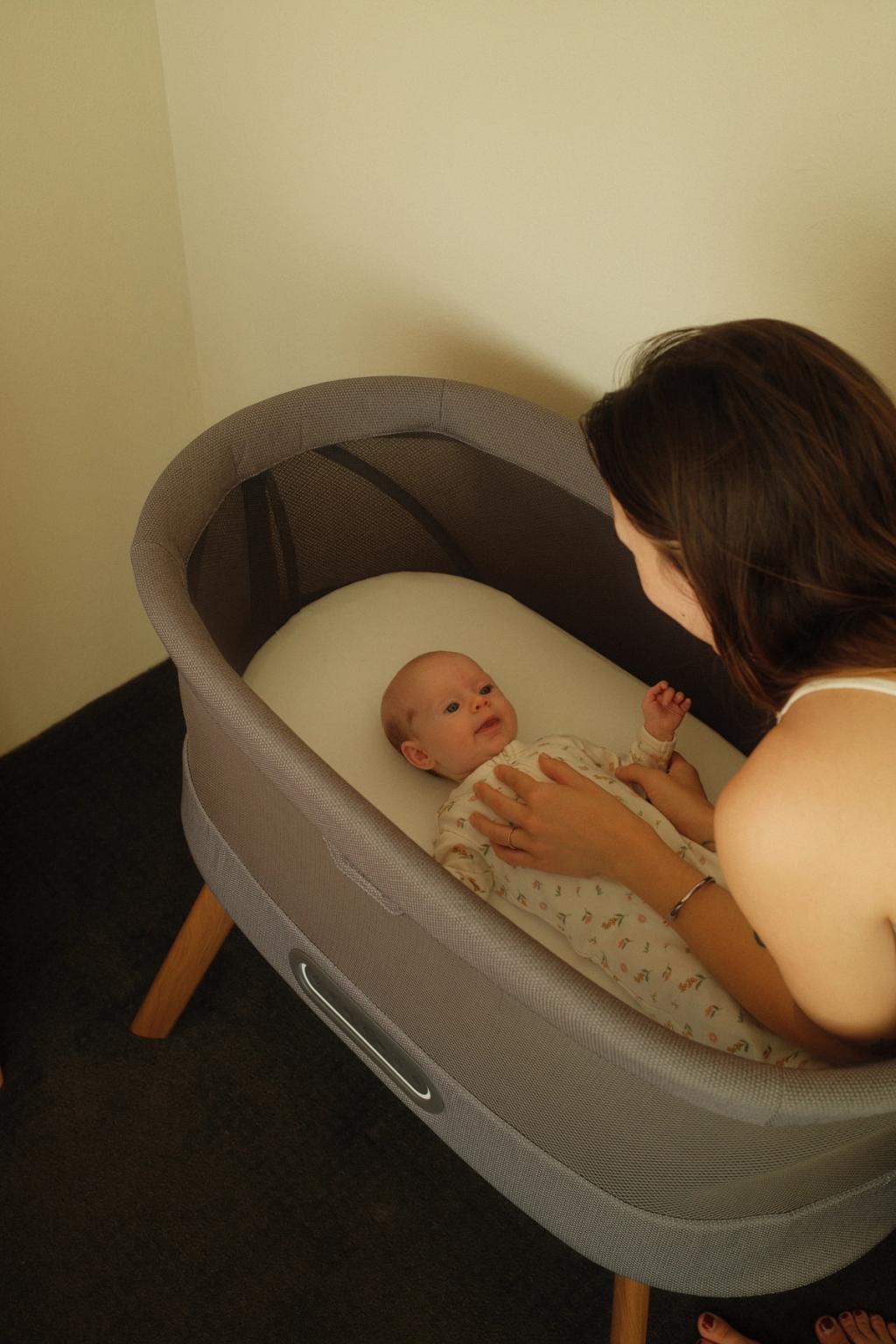
- Smart bassinet (I will NEVER go back to a standard bassinet after trying a smart one)
- Nappy bin
- Baby monitor with camera
- Nursing chair
- A high chair that can be used from newborn up to 6 years. (It’s so nice being able to have your newborn elevated when you’re in the kitchen or at the dining table.)
- Smart rocker (with cry detection)
A few things that matter more than they look like they would:
- Cots and bassinets have different standards for a reason. A full-size household cot should meet AS/NZS 2172; a bassinet, cradle or portable/folding cot should meet AS/NZS 2195 (or the equivalent). Both address slat spacing, mattress fit, structural strength and entrapment risk — but they're tested differently because they're used differently, so don't assume one certification covers the other.
- Mattress fit is a safe-sleep issue, not a comfort one. A safe mattress should fit the cot or bassinet snugly, with no more than a small gap (roughly two adult fingers) between the mattress edge and the sides. Gaps are a genuine entrapment risk, and it's one of the most overlooked safety checks when parents buy a mattress separately from the cot.
- Keep early sleep simple. Current safe-sleep guidance in Australia recommends a firm, flat, well-fitted mattress with just a fitted sheet. No pillows, loose blankets, bumpers or soft toys in the sleep space for young babies. It feels bare compared to the nursery photos on Pinterest, but it's the evidence-based version.
- Buy furniture that grows with you. A bassinet you'll outgrow in four months is fine, that's what it's for. But for the bigger-ticket items (cot, high chair), look for ones that convert or adjust as your baby grows, since it's genuinely one of the better ways to get more use out of a single purchase.
- Cry detection technology. You never truly understand how sleep deprived you’ll be as a parent until your first baby arrives. Until very recently cry detection technology has been outrageously expensive, but brands like Redsbaby have started bringing in this tech at a more affordable price. Their KIPP Bassinet and SOMA Smart Rocker will free up your hands, and allow you longer periods of rest which are so valuable.
For mum and dad
It's easy to spend all the prep energy on the baby's gear and forget that you're recovering from birth (or supporting someone who is).
- Maternity pads
- Nipple cream
- Nursing bras
- Breast pads
- Breast pump
- Sterilizer
- Bottle warmer
- Nursing pillow
- Hospital bag
- Comfy pyjamas and clothes
- Frozen meals to cover days/weeks after birth
Practical tips:
- Pack your hospital bag by week 36. Include something comfortable to wear home (not your pre-pregnancy jeans, trust me), a phone charger with a long cable, snacks, and a going-home outfit for the baby in two sizes, since newborn sizing is a guessing game.
- Batch-cook before the due date. Simple, freezer-friendly meals you can heat one-handed matter more in week two than almost anything on the baby registry. Tip: Freeze them in a single portion size in containers that are microwave safe.
- Nursing bras: buy for after, not before. Your size will change again once feeding is established, so avoid over-investing in a full wardrobe of nursing bras until a couple of weeks in.
For baby
It's the category with the most sheer volume of choice, and also the one where fabric quality matters more than most new parents realise.
- Onesies
- Nappies
- Wipes
- Swaddles + Baby Wraps
- Blankets
- Bibs + burp cloths
- Dummies
- Soft toys
- Sleep suits (ErgoPouch is my favourite)

What "safe fabric" actually means:
- Look for OEKO-TEX Standard 100 certification on anything that touches your baby's skin including wraps, swaddles, onesies, muslins. It means the fabric has been independently tested against a list of more than a thousand substances that can be harmful to health, from allergenic dyes to heavy metals, and it applies to every component, not just the outer fabric but threads, buttons and trims included.
- Baby items sit in the strictest testing category. OEKO-TEX tests different product types to different limits, and items intended for babies and toddlers are held to the tightest thresholds of any category, in recognition of how much more sensitive and permeable newborn skin is. The label is a useful shortcut because you don't have to take a brand's word for "gentle" or "safe" when there's an independent standard behind it.
- Natural, breathable fibres for swaddling. Cotton and bamboo blends breathe better than synthetics, which matters for temperature regulation. Overheating is a known risk factor in early sleep, so a swaddle's warmth (often labelled with a TOG rating) should match the room temperature, not just the season on the calendar.
- Hip-healthy swaddling. Look for swaddles, wraps and carriers that allow the hips and knees to bend up and out (a natural "frog" position) rather than pinning the legs straight. It's a small design detail that matters for healthy hip development, and it’s something many ‘trendy’ carriers and swaddles don’t design for.
The five-minute buying checklist
If you remember nothing else from this guide, check these five things before you buy anything for baby:
- Is there a visible compliance label? AS/NZS 2088 for prams and strollers, AS/NZS 1754 for car seats and capsules, AS/NZS 2172 or 2195 for cots, bassinets and portable cots.
- Is the fabric independently certified? Look for OEKO-TEX Standard 100 (or equivalent) on anything against the skin.
- Can you see it or trial it before you commit? Demonstration videos, comparison charts, in-person demo days and a returns or trial guarantee all tell you a brand is confident enough in its product to let you check before you buy.
- What's the warranty? A genuine, clearly stated warranty is one of the simplest signals of how a brand expects its product to hold up over years of actual use.
- Will it still make sense in a year, or with a second child? Not everything needs to grow with your family, but for the big purchases: the pram, the cot, the car seat it's worth asking the question once, upfront, rather than twice, later.
None of this needs to be perfect. Every parent's list ends up slightly different once real life gets involved, and that's fine. The goal isn't to tick every box, it's to walk in feeling like you know what you're actually looking at. That's really all "ready" means.
Want to see any of this in person before you decide? Redsbaby runs demonstration days and in-store trials across Australia, and every product page includes real demonstration video and the safety standards it meets because we'd rather you see it and try it than just take our word for it.